
How RAG Systems Work: A Practical Guide to Retrieval-Augmented Generation
By Script Forge · April 14, 2026 · 3 min read
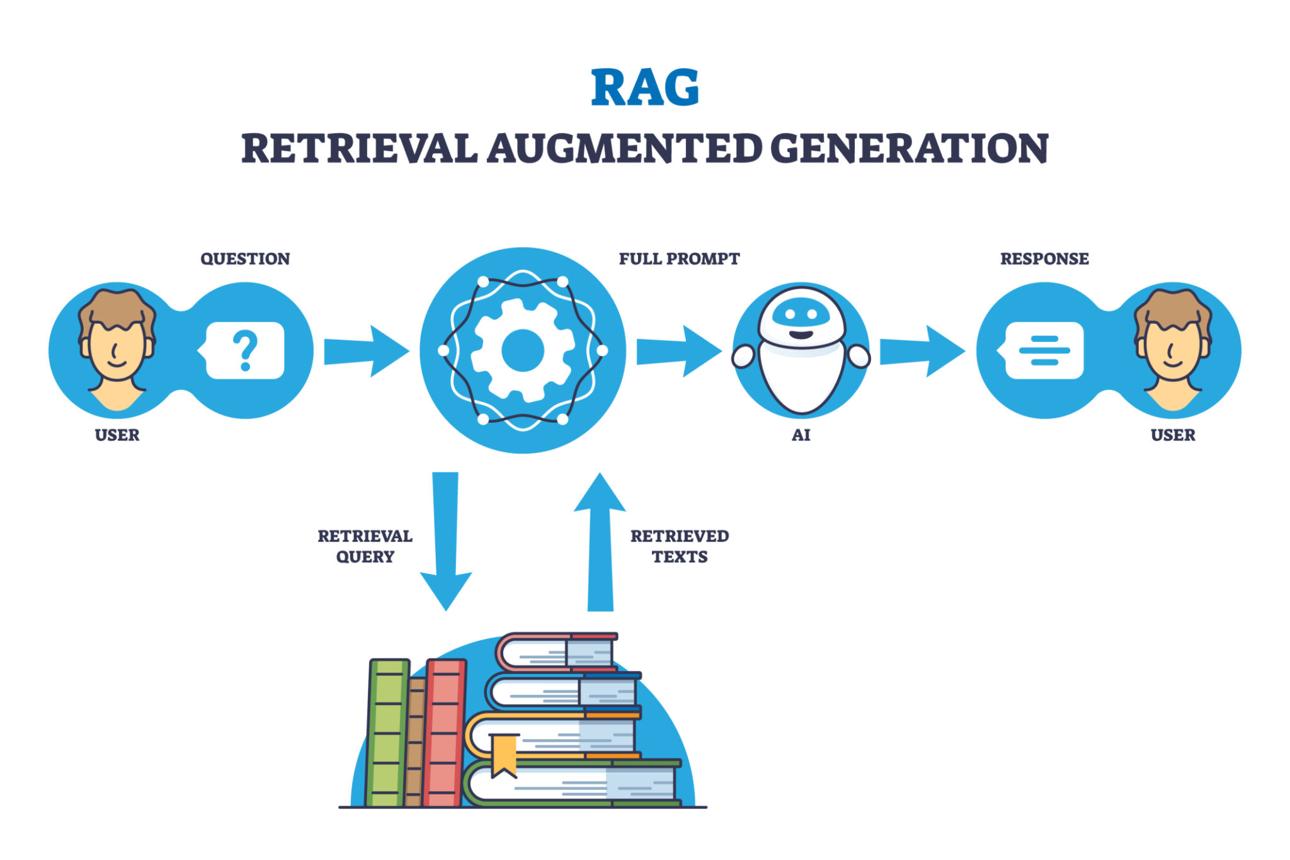
Learn how Retrieval-Augmented Generation (RAG) works and how to build accurate, production-ready AI systems using vector search and LLMs.
Retrieval-Augmented Generation (RAG) is the backbone of modern AI applications that require accurate, up-to-date, and context-aware responses.
If you’ve used an AI chatbot that answers questions based on your own documents or knowledge base, you’ve used a RAG system.
In this guide, we explain how RAG works, why it is essential for production AI systems, and how developers can build one.
What Is a RAG System?
RAG (Retrieval-Augmented Generation) combines:
- Retrieval: Fetching relevant documents from a database
- Generation: Using an LLM to generate a response based on those documents
Unlike standard LLMs, RAG systems do not rely only on training data. They use external knowledge sources at runtime.
Why RAG Is Important
- Reduces hallucinations
- Provides up-to-date information
- Allows custom knowledge bases
- Improves response accuracy
This is why most production AI systems today are built with RAG rather than standalone LLMs.
How RAG Works (Step-by-Step)
- User submits a query
- Query is converted into an embedding
- Vector database retrieves similar documents
- Relevant documents are added to prompt context
- LLM generates response using that context
Architecture of a RAG System
- Embedding model
- Vector database (e.g., Pinecone, FAISS)
- Retriever logic
- LLM (GPT, Claude, etc.)
Each component plays a role in delivering accurate responses.
Example: Simple RAG Pipeline in Python
from langchain.embeddings import OpenAIEmbeddings
from langchain.vectorstores import FAISS
from langchain.llms import OpenAI

documents = ["AI is transforming industries", "RAG improves accuracy"]

embeddings = OpenAIEmbeddings()
vector_store = FAISS.from_texts(documents, embeddings)

query = "What improves AI accuracy?"
docs = vector_store.similarity_search(query)

llm = OpenAI()
response = llm("Answer based on: " + str(docs))

print(response)
Best Practices for RAG Systems
- Chunk documents properly
- Use high-quality embeddings
- Limit context size
- Evaluate retrieval accuracy
RAG vs Fine-Tuning
RAG is preferred when:
- Data changes frequently
- You need explainable outputs
Fine-tuning is better when:
- You need domain-specific behavior
- Data is stable
Conclusion
RAG systems are essential for building reliable AI applications.
They allow you to combine the power of LLMs with real-world data, making them practical for production use.
Related Reading
If you’re new to LLMs, start here: What Are Large Language Models?
Work With ScriptForge
We design and deploy production-ready RAG systems, AI assistants, and enterprise AI platforms.